There is a specific sensory magic that happens when a scorching hot wok meets fresh rice noodles and a bouquet of aromatic herbs. That unmistakable fragrance—a combination of caramelized soy, pungent garlic, and the peppery punch of Thai basil—defines the experience of authentic Thai Drunken Noodles.
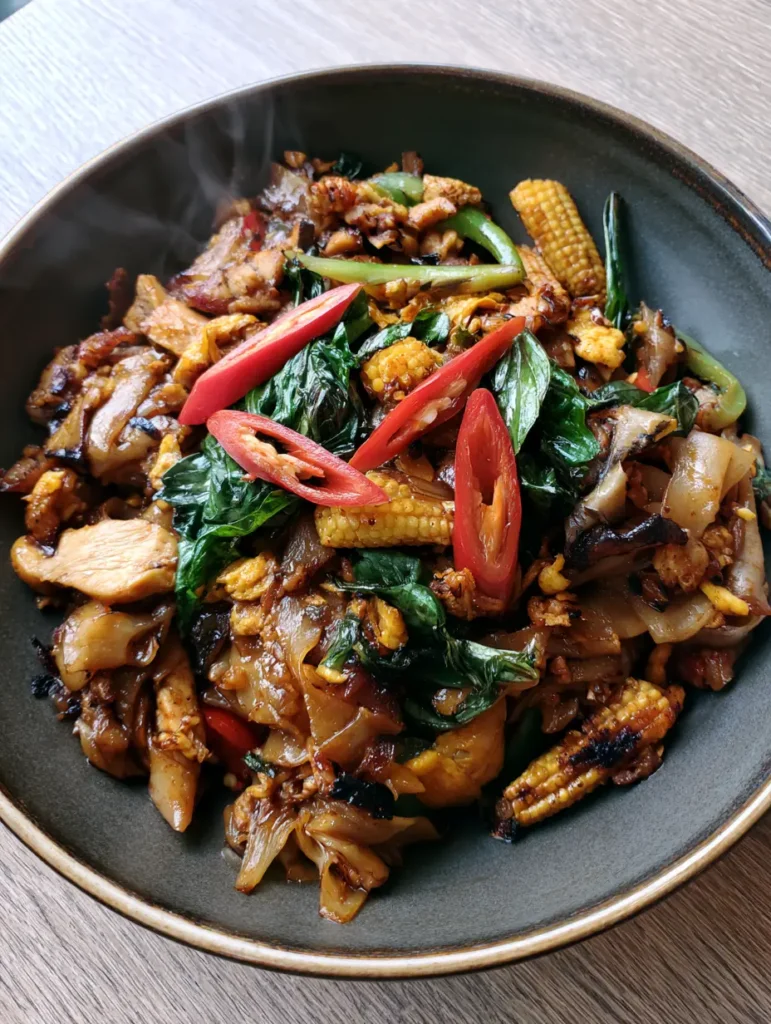
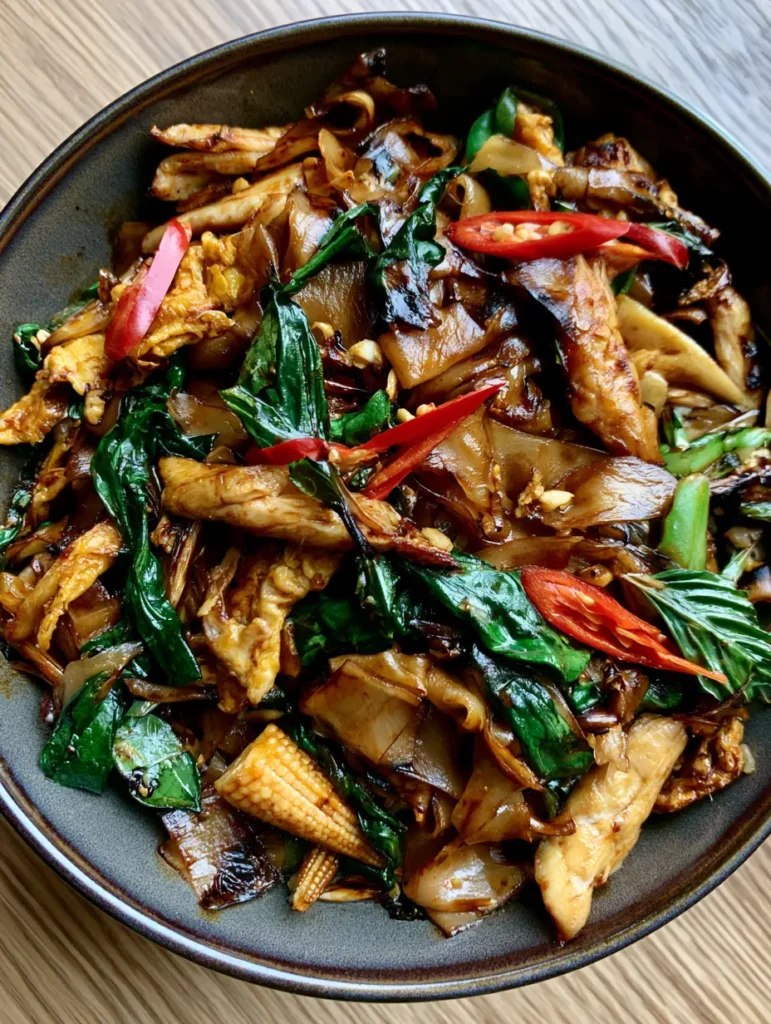
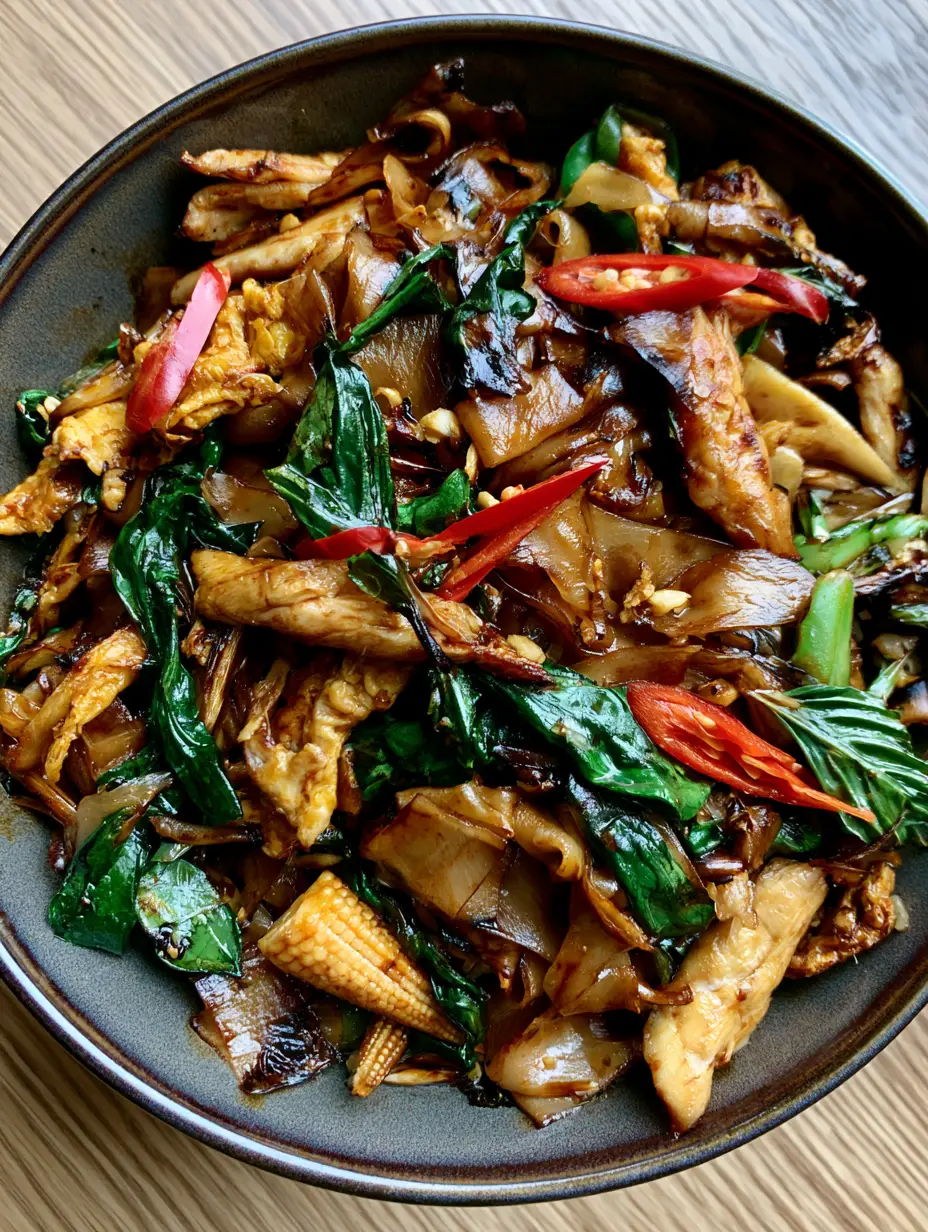
When you look at a bowl of Pad Kee Mao, you should see a messy yet masterful display of textures. We are talking about wide, flat rice noodles that aren’t just coated in sauce but are physically marked by the flame, boasting those coveted charred, caramelized edges that signify true “wok hei.”
In this guide, we are recreating the exact visual and flavor profile of the best street stalls in Bangkok. Imagine thin slices of seared chicken breast, vibrant wilted green Thai basil, and the sharp heat of red bird’s eye chilies, all brought together in a mahogany-hued glaze that shimmers under the light.
The Secret Anatomy of an Irresistible Thai Stir-Fry
To achieve the restaurant-quality results seen in professional culinary photography, we have to look beyond just the ingredients. It is about the chemistry of high-heat cooking and the strategic layering of flavors that create a dish that is as visually stunning as it is delicious.
- The Mahogany Glaze: A specific blend of dark and light soy sauces provides that deep, glossy finish that clings to every noodle.
- Visual Texture: We utilize blistered baby corn and crisp green bell pepper strips to provide a structural contrast to the soft, chewy noodles.
- The “Drunken” Heat: Sliced red bird’s eye chilies aren’t just for spice; they provide essential pops of red color against the dark sauce.
- Wok-Charred Excellence: Achieving those slightly burnt, caramelized noodle edges is the hallmark of a skilled home cook.
Essential Components for Your Pad Kee Mao Pantry
Building an authentic Thai Drunken Noodles experience requires a balance of salty, sweet, and spicy. Every ingredient in this list serves a dual purpose: providing a foundation for flavor and creating the specific visual markers of the dish.
Wide Flat Rice Noodles: You’ll need 14 oz (400g) of dried wide rice noodles or 1 lb (450g) of fresh ones. These act as the canvas for our dark soy glaze and are essential for achieving those wide, charred surfaces.
Chicken Breast Slices: Use 1/2 lb (225g) of chicken breast, sliced thinly against the grain. This ensures the meat sears quickly and stays tender, mimicking the “seared chicken breast slices” found in high-end Thai presentations.
Dark Soy Sauce: 1 tbsp (15ml) of Thai dark soy sauce is what provides the mahogany color. It is thicker and sweeter than regular soy sauce and is responsible for the “thick, glossy dark mahogany” look of the sauce.
Thai Basil Leaves: You will need 1 cup (30g) of fresh Thai basil. Unlike Italian basil, these leaves hold up to heat and provide that signature “wilted green” visual interspersed throughout the bowl.
Red Bird’s Eye Chilies: 3-5 chilies (adjusted for heat) sliced on a slant. These provide the heat that gives “Drunken” noodles their name and offer a bright red visual contrast.
Aromatic Foundation: 4 cloves (20g) of minced garlic and 1 tbsp (15g) of minced ginger. These sizzle in the oil to create a fragrant base that coats the scrambled egg bits.
The Vegetable Crunch: 1/2 cup (75g) of baby corn and 1 medium (150g) green bell pepper. We want the baby corn to be blistered and the peppers to be tender-crisp to keep the dish from feeling one-dimensional.
Invisible Essentials: 3 tbsp (45ml) of neutral high-smoke point oil (like canola or grapeseed) for searing, and a pinch of salt to season the chicken. These are scientifically required to achieve the oil sheen and seared texture described in our visual blueprint.
Tools Required to Master the Wok-Char
To get those “wok-charred noodle edges,” your equipment needs to handle intense heat. A heavy-bottomed carbon steel wok is the gold standard, but a large cast-iron skillet is a fantastic alternative for home cooks.
You will also need a high-quality spatula (preferably a wok turner) to keep the ingredients moving rapidly. This prevents the “scrambled egg bits” from burning while ensuring the noodles get enough contact with the hot surface to caramelize without turning into a mushy mess.
If you enjoy these bold, savory flavors, you might also love our Sweet Chili Chicken Wraps or perhaps a hearty One-Pot Steak and Pasta for your next weeknight meal.
Mastering the Art of the Perfect Noodle Char
Preparing the Protein and Vegetables
Start by slicing your chicken breast into very thin, uniform pieces. Pat them dry with a paper towel—this is a culinary secret to ensuring a hard sear rather than steaming the meat. Toss the chicken with 1 tsp (5ml) of light soy sauce and a touch of oil.
Prepare your vegetables by slicing the green bell pepper into thin strips and cutting the baby corn in half lengthwise. This increases the surface area, allowing the baby corn to blister effectively when it hits the hot metal of the wok.
Building the Liquid Gold Sauce
In a small bowl, whisk together 2 tbsp (30ml) oyster sauce, 1 tbsp (15ml) dark soy sauce, 1 tbsp (15ml) light soy sauce, and 1 tsp (5g) sugar. This mixture will provide the “dark soy glaze” that coats the noodles in a thick, glossy sheen as it reduces in the heat of the pan.
The High-Heat Dance
Heat your wok until it is smoking slightly. Add 1 tbsp (15ml) of oil and swirl to coat. Add the chicken slices in a single layer. Let them sit undisturbed for 60 seconds to develop that golden-brown crust before tossing. Once seared, move the chicken to the side of the wok.
Add another splash of oil and crack 2 large eggs into the center. Let them set for a moment before breaking them into “golden scrambled egg bits.” Incorporate the garlic and red chilies, stirring for only 30 seconds until the aroma fills your kitchen.
Caramelizing the Noodles
Add the prepared rice noodles to the wok. Pour the sauce directly over the noodles. Increase the heat to maximum and spread the noodles out so they have maximum contact with the wok surface. This is where the “caramelized edges” are born. Let them sizzle for 30-45 seconds before flipping.
Add the baby corn and green bell peppers. Toss vigorously for 2 minutes. You are looking for the sauce to thicken and the noodles to take on a “dark mahogany” color with visible charred spots. The oil sheen should start to appear as the sauce emulsifies with the residual heat.
The Final Aromatic Finish
Turn off the heat. This is crucial for the Thai basil. Toss in the cup of basil leaves. The residual heat will wilt them perfectly, turning them a deep, vibrant green without losing their essential oils. Serve immediately in a shallow dark ceramic bowl, garnished with a fresh basil sprig.
Expert Tips for Success
- Don’t Overcrowd: If your wok isn’t large enough, cook the recipe in two batches. Overcrowding drops the temperature, leading to soggy noodles instead of charred ones.
- Noodle Hydration: If using dried noodles, soak them in lukewarm water until they are flexible but still have a firm “bite” (al dente). They will finish cooking in the wok sauce.
- The Sugar Factor: Don’t skip the small amount of sugar in the sauce; it is the catalyst for the caramelization that creates those beautiful dark edges.
- Chili Control: For less heat but all the color, remove the seeds from the bird’s eye chilies before slicing them into slanted pieces.
Storage, Reheating, and Meal Prep
Thai Drunken Noodles are best enjoyed fresh from the wok to appreciate the “steam and oil sheen.” However, you can store leftovers in an airtight container in the refrigerator for up to 3 days. The noodles will naturally firm up as they cool.
To reheat, add a splash of water or chicken broth to a pan over medium heat. This helps loosen the “thick mahogany glaze” and softens the noodles without making them rubbery. Avoid microwaving if possible, as it can lead to uneven textures.
What to Serve With This Dish
While this is a complete meal on its own, you can create a full Thai-inspired spread. For a different protein profile on another night, you might enjoy our Creamy Garlic Pork Chops or a vibrant Steak Fajita Bowl.
If you’re looking for a dessert to cool down the palate after the bird’s eye chilies, our Garlic Parmesan Chicken Meatloaf is a savory alternative, or you could go straight to a sweet treat like Oreo Cheesecake Cookie Cups.
Frequently Asked Questions
You can use Italian basil in a pinch, but the flavor will be significantly different. Thai basil (Holy Basil or Star Anise Basil) has a peppery, anise-like flavor and sturdier leaves that withstand high heat better.
The secret is Thai Dark Soy Sauce (Kee-Se-Ew-Dum). It is a molasses-thick, dark sauce that provides the deep mahogany color and a hint of sweetness for caramelization.
Avoid over-soaking them. They should be flexible but still firm. Once in the wok, use a folding motion with a wide spatula rather than stirring vigorously to keep the wide noodles intact.
Pad See Ew is a mild, sweet, and salty dish with broccoli and egg. Pad Kee Mao (Drunken Noodles) is much spicier, uses Thai basil, chilies, and often more varied vegetables like baby corn and peppers.
There is no alcohol in the recipe! The name likely comes from the idea that the noodles are so spicy they require a cold drink (traditionally beer) to manage the heat, or that they are a popular ‘hangover cure’ in Thai street food culture.
Authentic Thai Drunken Noodles (Pad Kee Mao)
Thai Drunken Noodles: The Ultimate Guide to Authentic, Wok-Charred Pad Kee Mao
Ingredients
Equipment
Instructions
- Soak dried rice noodles in lukewarm water for 20-30 minutes until flexible but firm. Drain and set aside.
- Whisk oyster sauce, dark soy sauce, light soy sauce, and sugar in a small bowl until the sugar dissolves.
- Heat 1 tbsp oil in a wok over high heat. Sear chicken slices until golden brown and cooked through. Remove and set aside.
- Add another tbsp oil. Scramble eggs into small bits. Add minced garlic and sliced chilies, stirring for 30 seconds until fragrant.
- Add noodles and sauce. Spread noodles against the wok surface. Let sit for 45 seconds to create charred, caramelized edges. Toss and repeat.
- Add baby corn and green bell peppers. Toss for 2 minutes until corn is blistered and peppers are tender-crisp. Return chicken to the pan.
- Turn off heat. Toss in Thai basil leaves until wilted. Garnish with a fresh sprig and serve immediately.
Notes
If the noodles stick, add a tiny splash of water to steam them loose.
Bring the Taste of Bangkok Home
This Thai Drunken Noodles recipe is more than just a quick stir-fry; it is a masterclass in balancing heat, texture, and the legendary wok-char. By focusing on the visual cues—the blistered corn, the wilted basil, and the mahogany noodles—you’ve created a dish that looks as professional as it tastes.
If you loved this recipe, please leave a comment below and let us know how your wok-char turned out! Don’t forget to sign up for our newsletter for more culinary deep-dives and share your creations to Pinterest.