There is perhaps no culinary icon more synonymous with the rugged beauty of Maine’s Acadia National Park than the legendary Jordan Pond House Popovers. For over a century, travelers have gathered on the lawn overlooking the Bubbles to tear into these towering, steam-filled treasures. The experience is sensory perfection: the crisp snap of a deeply browned crust giving way to a soft, custard-like interior that smells of toasted butter and warm eggs.
Bringing this experience into your own kitchen requires more than just a recipe; it requires an understanding of the culinary physics behind the “pop.” To achieve that dramatic, high rise seen in professional pastry shops, we must master the delicate balance of steam-based leavening. When done correctly, these popovers emerge from the oven with a crinkled, golden-brown exterior that is as structurally impressive as it is delicious.
This guide will walk you through the forensic details of recreating these masterpieces, ensuring your results match the visual splendor of a handheld smartphone photo taken in soft natural daylight. From the specific temperature of your milk to the exact moment you “vent” the steam, every step is designed for success. Get ready to transform your morning routine into a coastal Maine getaway.
The Irresistible Appeal of a Perfectly Baked Maine Popover
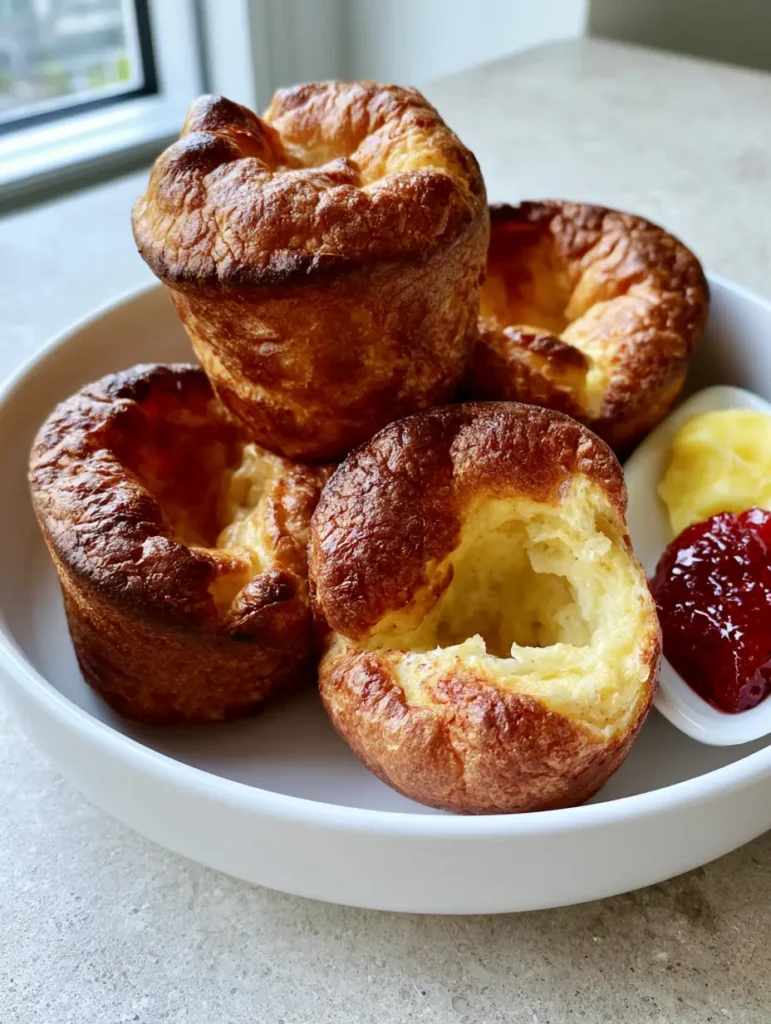
- Dramatic Architectural Rise: These popovers aren’t just muffins; they are towering structures with a deeply browned, crispy, and crinkled outer crust that defies gravity.
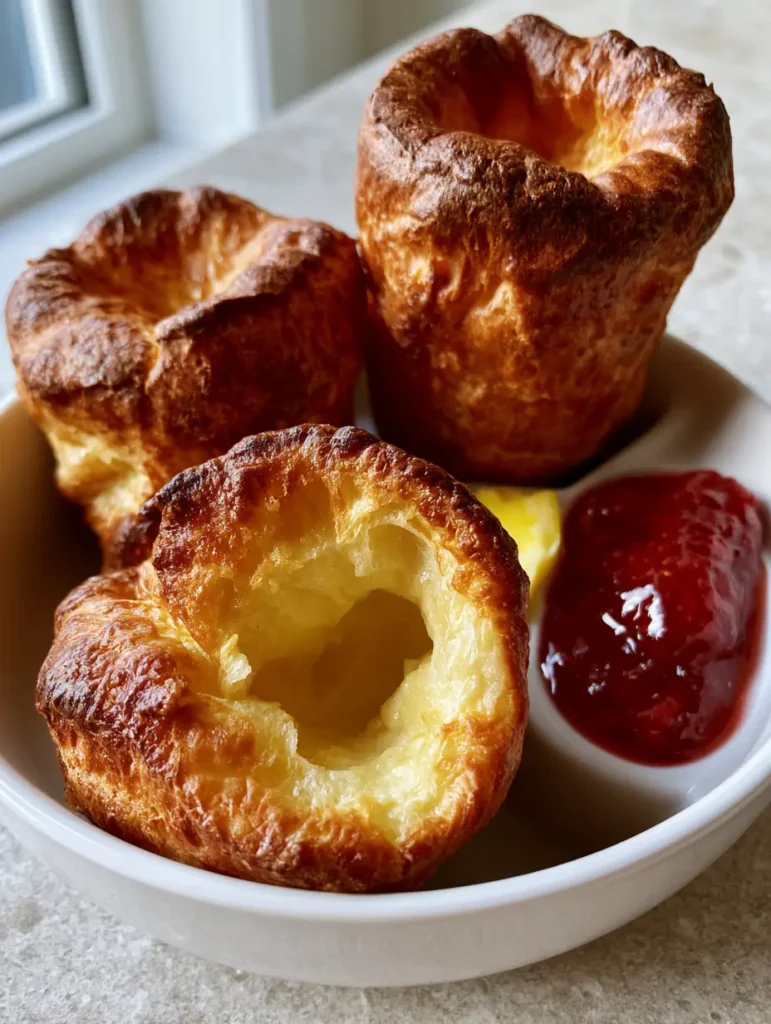
- The Custard-Hollow Contrast: Break one open to find a steaming, hollow center with a soft, custard-like texture that is the hallmark of a high-egg batter.
- The Classic Plating: Served in a simple white ceramic bowl, these golden gems are traditionally paired with yellow salted butter and glossy red strawberry preserves.
- Simple Ingredient Brilliance: Using just five foundational pantry staples, you can create a breakfast or side dish that feels incredibly luxurious and refined.
The Pantry Staples Behind Every Airy Popover
To achieve the specific visual and structural results of the Jordan Pond House Popovers, each ingredient must be selected and prepared with scientific precision. Unlike cakes, which rely on chemical leaveners, popovers rely entirely on the expansion of liquid into steam within a gluten-supported structure.
All-Purpose Flour: 1 cup (125g). Flour provides the necessary protein to build the “walls” of your popover. We use all-purpose rather than bread flour to ensure the interior remains tender and custard-like rather than chewy.
Whole Milk: 1 cup (240ml). Milk provides the liquid that will turn into steam, and its natural sugars contribute to that deeply browned, crinkled crust. It is imperative that your milk is at room temperature to prevent shocking the eggs and slowing the rise.
Large Eggs: 2 units (approx. 100g). Eggs act as the binder and the primary source of the “custard” flavor. Their proteins stretch as the steam expands, creating the hollow interior we are looking for.
Unsalted Butter: 2 tbsp (28g), melted. A small amount of fat in the batter adds richness and helps the crust develop those signature crinkles. Ensure it is cooled slightly so it doesn’t scramble the eggs during mixing.
Fine Sea Salt: 1/2 tsp (3g). Salt is the essential flavor enhancer that prevents the batter from tasting flat. It also helps strengthen the gluten strands, allowing the popover to hold its dramatic height.
Invisible Essentials: You will also need a small amount of vegetable oil or additional butter for greasing the pan. A high-smoke point oil is often preferred to ensure the popovers release cleanly after their high-heat bake.
Essential Tools for the Perfect Sky-High Rise
While you can technically bake popovers in a standard muffin tin, achieving the “Jordan Pond House” scale requires specific equipment. A dedicated popover pan features deep, narrow wells that are tapered at the bottom. This design forces the batter upward rather than outward, resulting in a more dramatic vertical rise.
If you are using a muffin tin, you may find your popovers resemble something closer to a large cookie cup in shape, though the flavor will remain authentic. Regardless of the pan, a heavy-duty whisk or a blender is required to ensure the batter is perfectly smooth and aerated. Finally, a wire cooling rack is essential to prevent the bottoms from becoming soggy immediately after baking.
Mastering the Art of the Steam-Powered Rise
Success with Jordan Pond House Popovers is found in the technique, specifically the management of oven temperature and batter aeration. Follow these steps meticulously to ensure your kitchen smells like a Maine summer morning.
Phase 1: The Critical Temperature Prep
Start by preheating your oven to 450°F (230°C). This high initial heat is the “engine” of the popover; it causes the liquid in the batter to rapidly convert to steam, pushing the batter up the sides of the pan. Place your empty popover pan inside the oven while it preheats. A hot pan ensures the batter begins cooking the moment it hits the metal, creating a crispy outer crust.
While the oven heats, ensure your eggs and milk have reached room temperature. If they are cold, they will absorb too much energy from the oven just to warm up, leaving less energy for the steam expansion. You can speed this up by placing cold eggs in a bowl of warm water for 5 minutes.
Phase 2: Mixing for a Custard-Like Interior
In a large bowl, whisk your eggs until they are frothy and pale yellow. Slowly stream in the room-temperature milk and the melted butter while continuing to whisk. Sift the flour and salt over the wet ingredients. Use a light hand; you want to whisk until the batter is the consistency of heavy cream with only a few tiny lumps remaining.
Over-mixing at this stage can lead to excessive gluten development. While we need some structure, too much will make the popover tough and bread-like rather than light and airy. If you prefer a more refined texture, similar to the base of delicate French almond cookies, you can strain the batter through a fine-mesh sieve.
Phase 3: The High-Heat Launch
Carefully remove the hot pan from the oven and grease the wells thoroughly. Fill each well about half to two-thirds full. You should hear a slight sizzle as the batter makes contact. Work quickly to keep the pan hot and return it to the center rack of the oven.
Bake at 450°F (230°C) for 15 minutes. Crucial Rule: Do not open the oven door. Opening the door releases the steam and drops the temperature, which can cause your popovers to collapse instantly. Observe through the oven window as the batter crinkles and climbs over the rim of the pan.
Phase 4: The Finishing Crisp and Venting
After 15 minutes, reduce the oven temperature to 350°F (175°C) and bake for an additional 15-20 minutes. This lower heat allows the interior to cook through to a soft custard consistency while the exterior firms up into a deeply browned, crispy shell. The popovers should look “handheld smartphone photo” ready, with a rich mahogany color.
Once they are tall and firm, remove the pan from the oven. Immediately use a small, sharp knife to poke a tiny slit in the side or top of each popover. This “vents” the internal steam. If the steam stays trapped, it will condense back into water and turn your beautiful crispy crust soggy within minutes.
Pro Secrets for a Hollow Center and Crispy Shell
- The Preheated Pan Trick: Never pour batter into a cold pan. The thermal shock of the hot pan is what creates the immediate “lift” required for a hollow center.
- Consistency is Key: Your batter should be thin. If it feels as thick as pancake batter, add a tablespoon of milk. It needs to be pourable to allow steam to escape easily.
- The “No-Peek” Policy: Resist the urge to check on them. Even a 10-second opening of the door can ruin the internal pressure required for the rise.
- Butter Quality: Since there are so few ingredients, the flavor of the butter shines through. Use a high-quality European-style butter for the best “Jordan Pond” experience.
The Best Ways to Store and Reheat Your Popovers
Popovers are best enjoyed within minutes of leaving the oven while the interior is still steaming and the crust is at its peak crispness. However, if you have leftovers, they can be stored in an airtight container at room temperature for up to 24 hours. To revive them, do not use a microwave, which will make them rubbery.
Instead, place them back in a 350°F (175°C) oven for 5-8 minutes until they regain their crunch. You can also freeze baked popovers for up to two months. Simply thaw them at room temperature and crisp them up in the oven before serving. They make a fantastic, quick addition to a spicy chipotle breakfast sandwich if you’re looking for a unique bread alternative.
What to Serve With Jordan Pond House Popovers
The traditional way to serve these is with a side of yellow salted butter and glossy red strawberry preserve. The saltiness of the butter cuts through the rich egginess, while the jam adds a bright, sweet finish. For a more decadent dessert-style treat, you could even pair them with a dollop of velvety Russian buttercream frosting or a spoonful of lemon curd.
If you are serving them as a side dish for dinner, they pair beautifully with hearty, sauce-heavy meals. Imagine tearing off a piece of a crispy popover to soak up the sauce from a rich creamy chicken alfredo or a hearty one-pot steak and pasta. The hollow center is practically designed for holding gravy or herb butter.
Frequently Asked Questions
Yes, you can refrigerate the batter for up to 24 hours. However, you must let it come back to room temperature and give it a vigorous whisk before pouring into the hot pan to ensure a proper rise.
While a popover pan is recommended for that signature Jordan Pond height, you can use a standard muffin tin. Your popovers will be shorter and wider, but they will still have the same crispy exterior and hollow center.
The crinkled texture comes from the high 450°F (230°C) initial baking temperature and the presence of fat (butter) in the batter, which causes the surface to brown and crisp rapidly as it expands.
This happens if the internal steam isn’t released. Always poke a small slit in the top or side of the popover immediately after taking them out of the oven to ‘vent’ the moisture.
The most common reasons are cold ingredients or opening the oven door too early. Room-temperature milk and eggs are essential to ensure the liquid turns to steam quickly, and opening the door releases the pressure needed to keep them tall.
The Authentic Jordan Pond House Popovers Recipe


Jordan Pond House Popovers: The Secret to Acadia’s Sky-High Golden Crust
Ingredients
Equipment
Instructions
- Preheat your oven to 450°F (230°C). Place your popover pan inside the oven while it preheats to ensure a crispy crust.
- In a large bowl, whisk room-temperature eggs until frothy. Add room-temperature milk and melted butter, whisking until combined.
- Sift in the flour and salt. Whisk until the batter is smooth and the consistency of heavy cream.
- Carefully remove the hot pan. Grease the wells and fill each half-full with batter.
- Bake at 450°F for 15 minutes without opening the door. Watch for the dramatic, high rise and crinkled tops.
- Reduce heat to 350°F and bake for 15-20 more minutes until deeply browned and firm.
- Remove from the oven and immediately poke a small hole in each to release steam. Serve in a ceramic bowl with salted butter and strawberry jam.
Notes
Never open the oven door during the first 15 minutes of baking or they will collapse.
Bringing the Taste of Maine to Your Table
There is nothing quite like the satisfaction of watching a simple batter transform into a towering, golden-brown masterpiece. These Jordan Pond House Popovers are a testament to the power of simple ingredients and proper technique. Whether you’re serving them for a special Sunday brunch or as a surprising side for dinner, they are guaranteed to be the star of the table.
We would love to see your sky-high creations! Did yours get that perfect crinkled crust? Leave a comment below and share your success with us. Don’t forget to follow us on Pinterest for more visually stunning recipe inspiration and kitchen secrets. Happy baking!