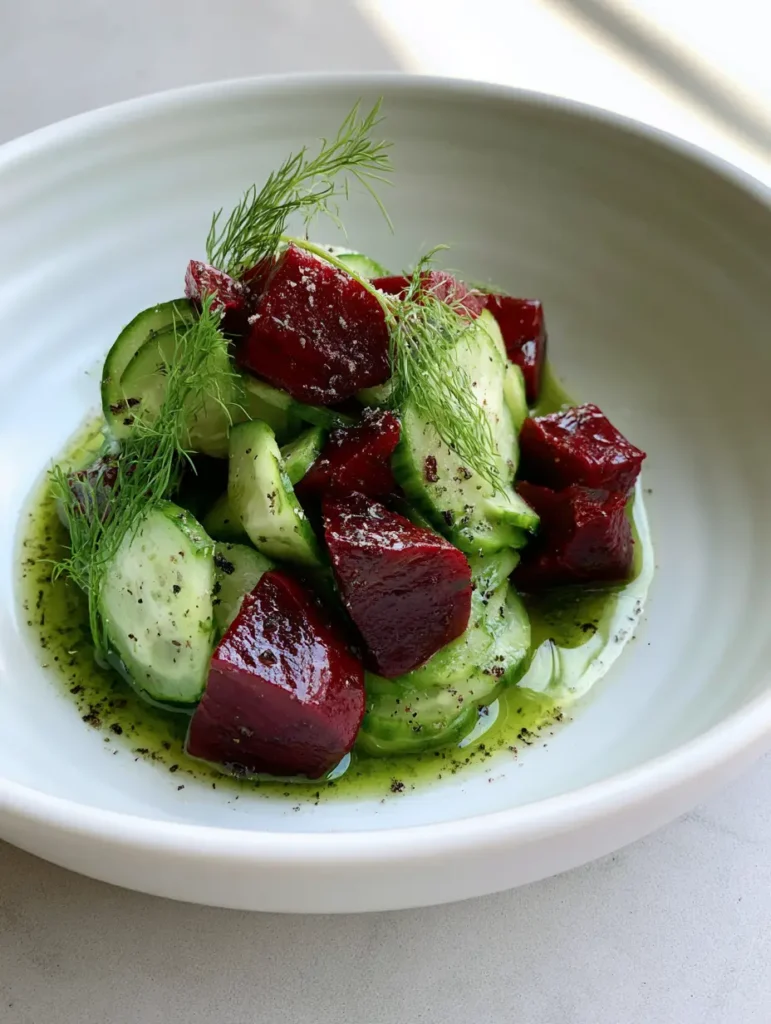
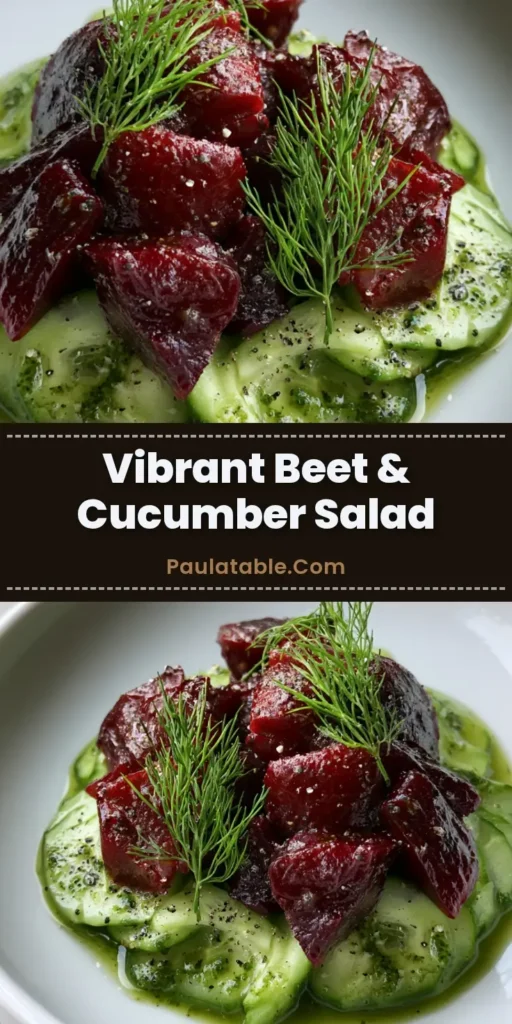
There is a specific kind of culinary magic that happens when the deep, earthy sweetness of a roasted root vegetable meets the crisp, hydrating snap of a garden-fresh cucumber. This Cucumber Beetroot Salad is not just a side dish; it is a masterclass in textural contrast and visual brilliance. Imagine a shallow white ceramic bowl where deep crimson beet wedges rest against a delicate lattice of paper-thin English cucumbers, all tied together by a shimmering, translucent green herb vinaigrette.
Whether you are looking for a vibrant addition to your weekend brunch or a sophisticated side for a steak fajita bowl, this salad delivers on every sensory level. The cool, refreshing nature of the cucumber cuts through the dense, buttery texture of the roasted beets, while the cracked black pepper and fresh dill provide a sharp, aromatic finish that lingers on the palate. It is a dish that looks as if it were plucked straight from a professional food photoshoot, yet it relies on simple, high-quality ingredients.
Why This Vibrant Salad is a Total Game-Changer
- The Perfect Temperature Contrast: By pairing warm or room-temperature roasted beets with chilled, thinly sliced cucumbers, you create a complex eating experience that keeps the palate engaged.
- Visual Sophistication: The “jewel-toned” contrast between the crimson beets and the bright green cucumbers, accentuated by the translucent herb vinaigrette, makes this a showstopper for entertaining.
- Nutrient-Dense Powerhouse: This salad is packed with nitrates from the beets for blood flow and high water content from the cucumbers for hydration, making it as functional as it is delicious.
- Herb-Forward Flavor Profile: Unlike heavy cream-based dressings, our translucent vinaigrette uses fresh dill and herbs to provide a light, citrusy lift that doesn’t mask the natural flavors of the vegetables.
Essential Elements for the Ultimate Cucumber Beetroot Salad
To achieve the specific visual and textural results seen in our professional blueprint, selecting the right varieties of these foundational ingredients is paramount. We aren’t just making a salad; we are building a structure of flavor.
English Cucumbers: Unlike standard slicing cucumbers, the English variety has a thinner skin and nearly non-existent seeds. This allows us to achieve those signature “paper-thin” slices that provide a delicate, ruffly base for the heavier beet wedges.
Fresh Red Beets: We opt for whole, raw beets that we roast in-house. Roasting at high heat (400°F / 200°C) concentrates the natural sugars, transforming the earthy flavor into something almost candy-like, which is essential for balancing the acidity of the dressing.
Extra Virgin Olive Oil: This is a foundational “invisible” ingredient. You need a high-quality oil not just for the vinaigrette, but to coat the beets during roasting to ensure they develop a smooth, tender exterior without drying out.
Fresh Dill Sprigs: Do not swap this for dried dill. The visual prompt calls for “fresh green dill sprigs,” which provide a feathery texture and a punchy, anise-like aroma that dried herbs simply cannot replicate.
Cracked Black Pepper: Using a pepper mill set to a coarse grind is vital. The “dusting” of pepper provides a sharp, biting counterpoint to the sweetness of the beets and adds a professional, finished look to the ceramic bowl.
Acid Component (Lemon or White Wine Vinegar): To create the translucent herb vinaigrette, we need a clear acid. This ensures the dressing remains bright and see-through rather than muddy or opaque.
Pro-Level Kitchen Tools for Precision Plating
Achieving the “forensic visual accuracy” of this dish requires more than just a knife. To get those cucumbers as thin as they appear in our handheld smartphone photo, a mandoline slicer is highly recommended. Set it to its thinnest setting (about 1.5mm) to create the translucent effect.
You will also need heavy-duty aluminum foil for the roasting process. Wrapping the beets tightly creates a steam-chamber effect, which allows the skins to slip off effortlessly after cooking. For the vinaigrette, a small high-speed blender or a very fine-mesh sieve is necessary to ensure the herbs are fully incorporated while keeping the liquid translucent.
Mastering the Art of Perfectly Roasted Beetroots
Preparation and Initial Seasoning
Begin by preheating your oven to 400°F (200°C). Scrub 1 lb (450g) of medium-sized red beets under cold water to remove any lingering soil. Trim the tops, leaving about an inch of the stem to prevent the “bleeding” of color during the roasting process.
Place the beets on a large piece of foil, drizzle with 1 tbsp (15ml) of avocado or olive oil, and sprinkle with a generous pinch of sea salt. The salt is a “foundational” ingredient that draws out moisture and seasons the beet from the inside out as it roasts.
The Roasting Process and Peeling
Seal the foil packet tightly and place it on a baking sheet. Roast for 45–60 minutes. You will know they are ready when a paring knife slides into the center with zero resistance—a sensory cue that indicates the starches have fully converted to sugar.
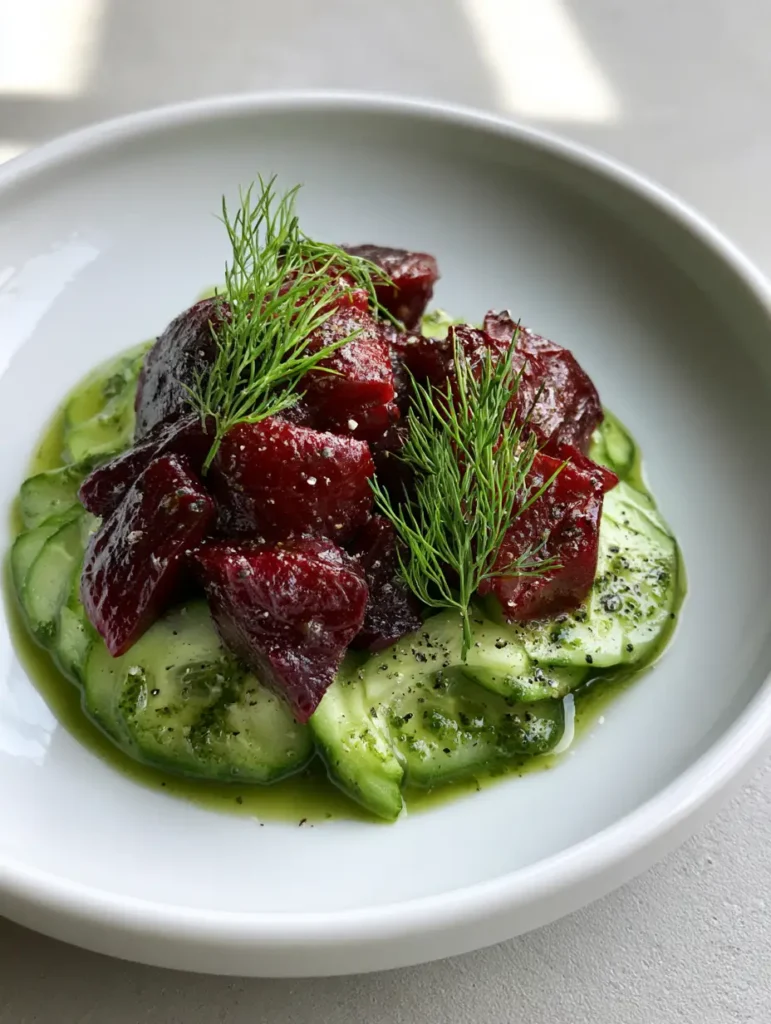
Once cooled slightly, rub the skins off with a paper towel. They should slide off like silk. Cut the beets into rustic, thick wedges. This shape provides the “deep crimson” visual weight required to anchor the salad against the light cucumber slices.
Engineering the Translucent Herb Vinaigrette
The dressing for this Cucumber Beetroot Salad must be “translucent green,” as per our visual blueprint. This is achieved by infusing a high-quality oil with fresh herbs and then straining it, or by very finely mincing the herbs into a clear acid-and-oil emulsion.
In a small jar, combine 3 tbsp (45ml) of extra virgin olive oil with 1 tbsp (15ml) of fresh lemon juice. Add 1 tsp (5g) of Dijon mustard—this acts as a natural emulsifier, keeping the oil and acid from separating while remaining invisible in the final pour. Whisk in 1 tbsp (4g) of finely chopped dill and parsley until the oil takes on a faint green glow but remains clear enough to see through.
Executing the Final Plating for Visual Impact
Creating the Cucumber Base
Take your thinly sliced English cucumber and arrange it in a shallow white ceramic bowl. Instead of a flat layer, try to “ruffle” the slices slightly. This creates vertical height and pockets where the vinaigrette can pool, ensuring every bite is seasoned. The green of the cucumber should look vibrant and fresh, providing a cool backdrop for the beets.
Adding the Crimson Contrast
Carefully place the roasted beet wedges over the cucumbers. Space them out so the deep red doesn’t completely bleed into the green cucumbers immediately. This contrast is the hallmark of the Cucumber Beetroot Salad. The visual cue to look for here is the “deep crimson” of the beets against the “translucent green” of the cucumbers.
The Finishing Touches
Drizzle the herb vinaigrette over the top, focusing on the beets to give them a glossy, jewel-like sheen. Garnish with the reserved fresh dill sprigs, placing them haphazardly for an organic, “unedited” look. Finally, apply a light dusting of freshly cracked black pepper. The coarse grains of pepper should be visible on the white ceramic and the surface of the vegetables.
Chef’s Secrets for Salad Perfection
- Chill Your Cucumbers: For the most refreshing snap, slice your cucumbers and place them in a bowl of ice water for 10 minutes before plating. Pat them completely dry before assembling.
- The “Bleed” Prevention: If you are making this ahead of time, do not mix the beets and cucumbers until the absolute last second. The pigment in beets (betalain) is highly water-soluble and will turn your entire salad pink within minutes if mixed too early.
- Balance the Earthiness: If your beets taste overly “dirty” or earthy, increase the lemon juice in your vinaigrette. The citric acid neutralizes the geosmin compound responsible for that soil-like flavor.
- Serving Temperature: For the best flavor, serve the beets at room temperature rather than ice-cold. This allows the complex sugars to be more apparent on the tongue.
Pairing Suggestions for a Complete Meal
This salad is remarkably versatile and pairs beautifully with protein-heavy mains. If you are looking for a hearty dinner, serve it alongside oven-baked chicken drumsticks for a balanced meal of crispy skin and refreshing greens.
For a lighter, high-protein lunch, consider serving it as a side to a cottage cheese flatbread. The creaminess of the cheese acts as a wonderful foil to the acidic vinaigrette. If you’re in the mood for something with a bit of a kick, the earthy beets provide a cooling contrast to a Cajun crispy chicken sandwich.
Frequently Asked Questions
While you can, roasted beets are highly recommended for the best flavor. Canned beets lack the concentrated sweetness and firm, ‘wedge-like’ texture that roasting provides, and they tend to bleed color more aggressively.
You can roast the beets and slice the cucumbers up to 2 days in advance, but store them in separate airtight containers. Assemble the salad and add the vinaigrette only when you are ready to eat.
No, English cucumbers have very thin, delicate skins that are perfectly edible and provide a beautiful green border to each slice. Just ensure you wash them thoroughly before slicing.
The key is to keep them separate until the moment of serving. Do not toss the salad together; instead, layer the beets on top of the cucumbers and drizzle with dressing right before the bowl hits the table.
A mandoline slicer is the best tool for the job. It ensures every slice is uniform in thickness, which allows the cucumbers to ruffle beautifully in the bowl and absorb the herb vinaigrette evenly.
The Ultimate Cucumber Beetroot Salad Recipe
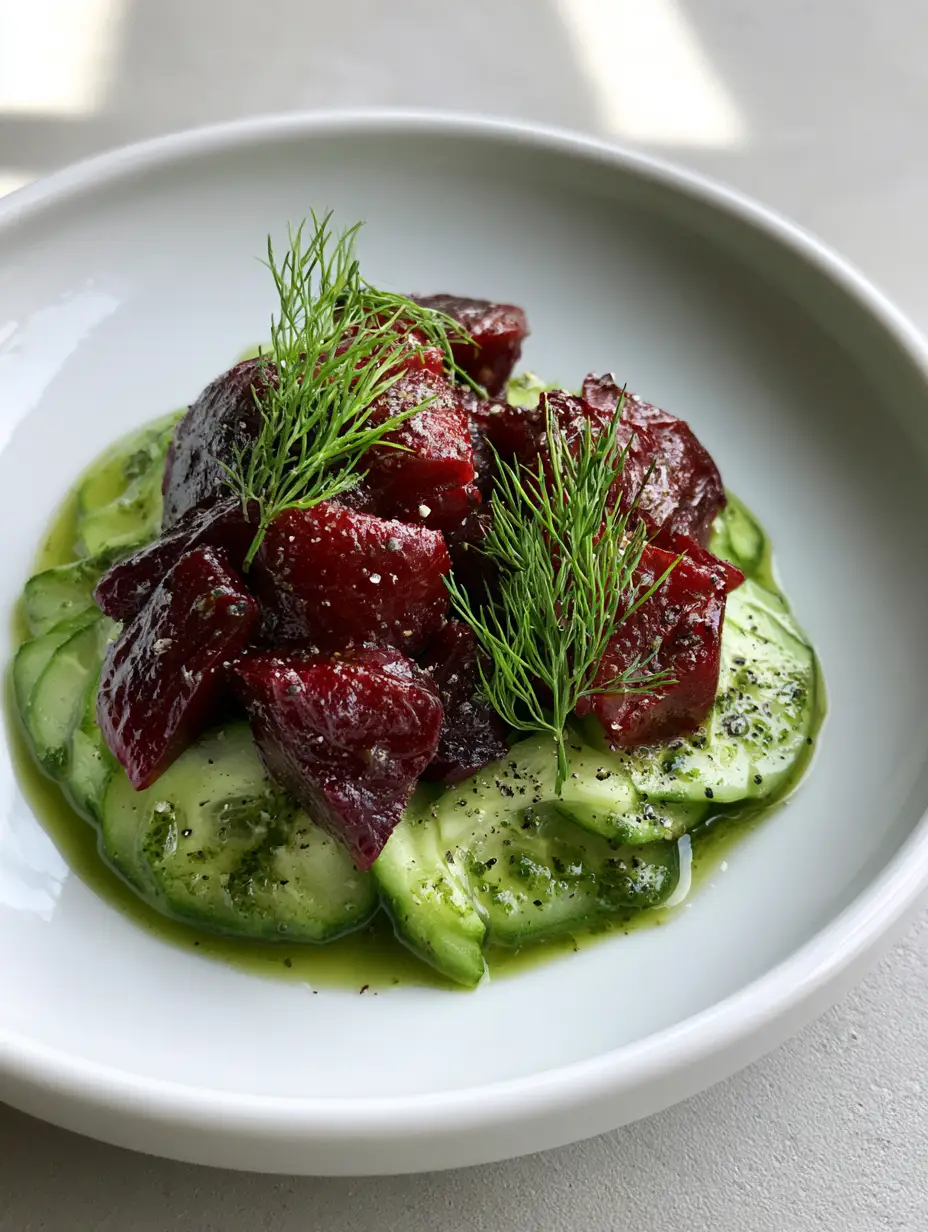
Cucumber Beetroot Salad with Roasted Wedges and Fresh Herb Vinaigrette
Ingredients
Equipment
Instructions
- Preheat oven to 400°F (200°C). Scrub beets and place on a large piece of foil. Drizzle with 1 tbsp oil and salt.
- Seal foil tightly and roast for 45-60 minutes until tender. Peel once cooled and cut into thick wedges.
- Use a mandoline to slice the English cucumber into paper-thin rounds.
- Whisk together olive oil, lemon juice, mustard, and chopped dill until a translucent green emulsion forms.
- Layer cucumber slices in a bowl, top with beet wedges, drizzle with vinaigrette, and finish with dill sprigs and cracked pepper.
Notes
Wait to combine the beets and cucumbers until serving to prevent the color from bleeding.
Closing Thoughts and Your Culinary Journey
Creating a Cucumber Beetroot Salad that looks like it belongs on a gourmet menu is all about respecting the integrity of the ingredients. The balance of the roasted, sweet beets with the crisp, cool cucumber creates a harmony that few other salads can match. It’s a testament to the idea that when you use professional techniques like precision roasting and mandoline slicing, simple vegetables can become extraordinary.
We would love to see your version of this vibrant dish! If you enjoyed this recipe, please leave a comment below or share your photos with us. Be sure to follow us on Pinterest for more visually stunning recipe inspiration and culinary tips. Happy roasting!