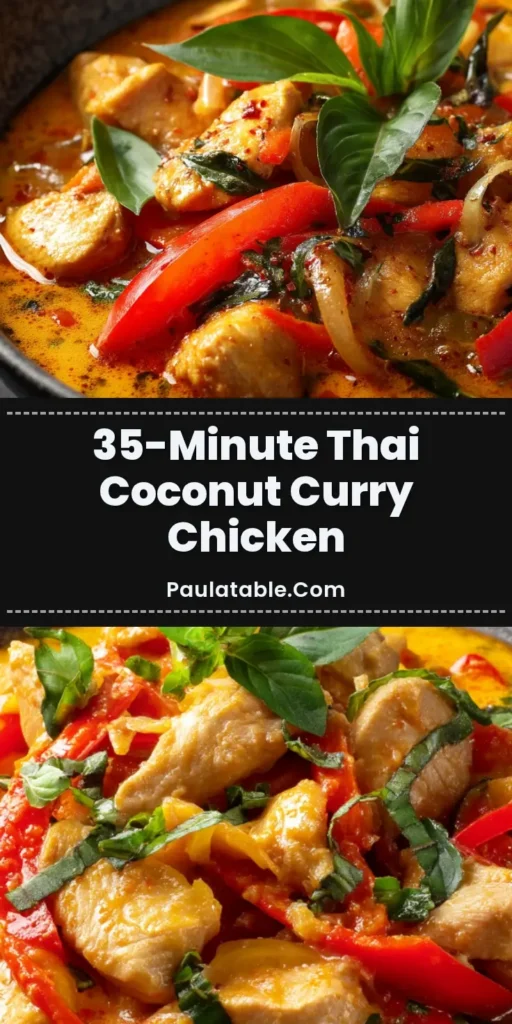
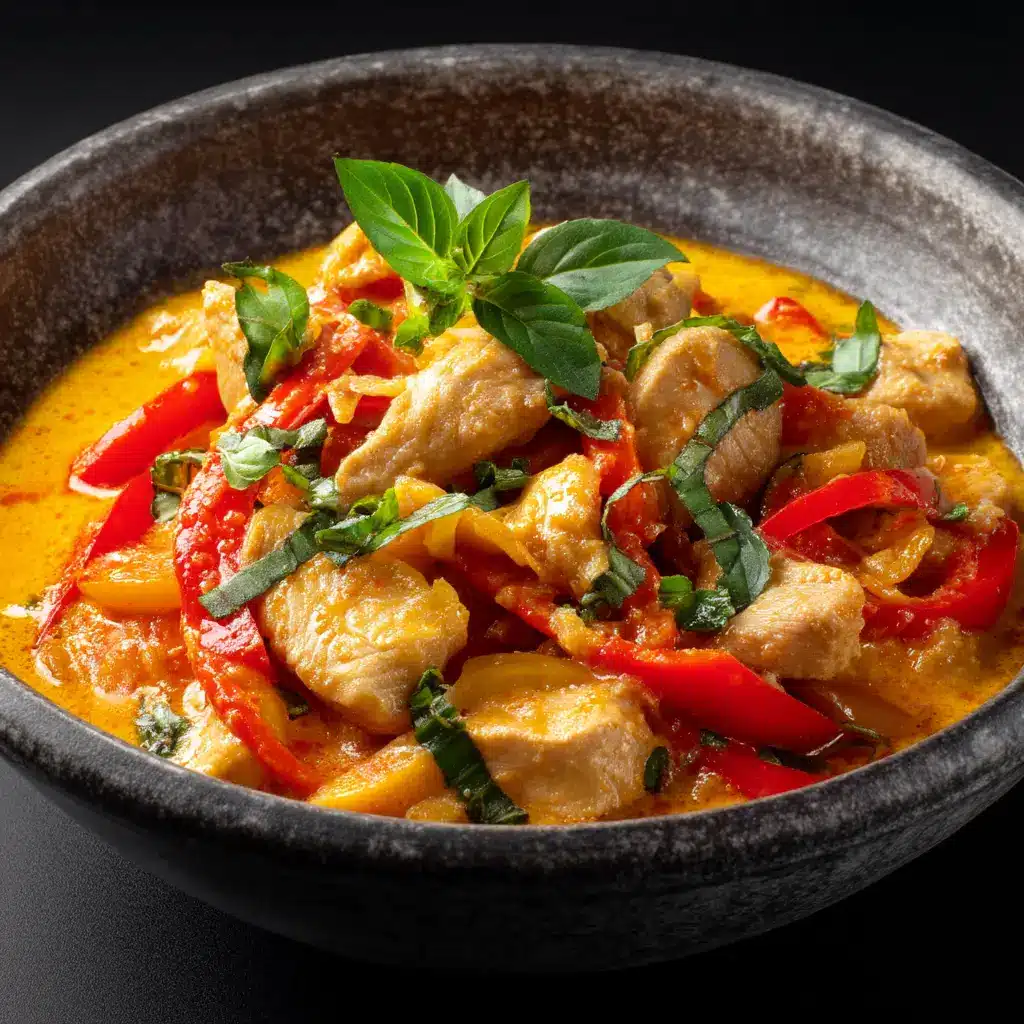
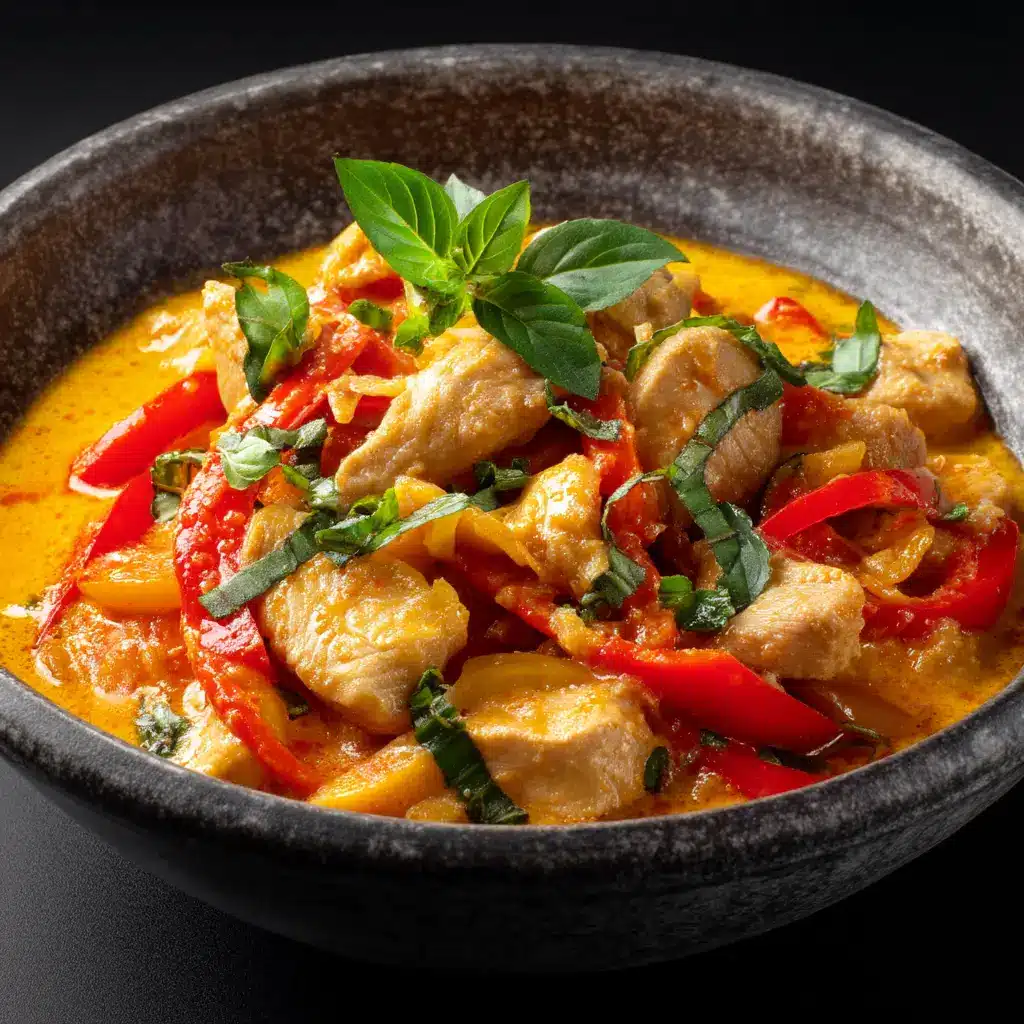
There is nothing quite like sitting down to a rustic dark bowl filled with vibrant Thai Coconut Curry Chicken. This recipe perfectly balances sweet, savory, and spicy notes to deliver an unforgettable dining experience. Every spoonful offers an appetizing and delicious aesthetic that rivals your favorite upscale restaurant.
The secret to this dish lies in the rich, creamy orange-yellow coconut sauce that elegantly coats the tender chicken chunks. By blooming aromatics and using premium full-fat coconut milk, you create a professional-level gloss and high-detail texture in the sauce. It is a photorealistic culinary dream brought to life right in your own kitchen.
Why This Thai Coconut Curry Chicken Will Become Your Culinary Obsession
- Unmatched Visual Appeal: The brilliant orange-yellow sauce contrasts beautifully with the fresh green Thai basil leaves and vibrant sliced red bell peppers.
- Perfectly Balanced Textures: Tender, juicy chicken chunks harmonize with slightly blistered vegetables for a satisfying bite.
- Restaurant-Quality Gloss: Utilizing the natural fats in coconut milk ensures a silky, glossy sauce texture that clings to every ingredient.
- Incredible Aromatics: The intoxicating aroma of blooming curry paste and fresh herbs will make your kitchen smell divine.
Essential Components for a Rich, Creamy Orange-Yellow Curry Base
Boneless Skinless Chicken Breasts (1.5 lbs / 680g): Cut these into uniform 1-inch (2.5cm) cubes for perfectly tender chicken chunks. Searing them locks in moisture while building a savory foundation.
Coconut Oil (2 tbsp / 30ml): Using a high-heat fat like coconut oil enhances the natural tropical notes of the dish. It is essential for properly blistering the vegetables.
Yellow Onion (1 medium / 150g): Sliced into thin strips, the onion caramelizes slightly to add a deep, natural sweetness. It acts as an aromatic pillar for the creamy sauce.
Red Bell Pepper (1 large / 150g): Sliced red bell peppers provide a stunning visual pop and a crisp-tender crunch. Their sweetness cuts through the heat of the curry paste.
Thai Red Curry Paste (3 tbsp / 45g): This concentrated paste delivers complex heat, lemongrass, and galangal notes. Toasting it in oil releases its essential oils for maximum flavor.
Ground Turmeric (1 tsp / 3g): This is the culinary forensic secret to achieving that exact rich, creamy orange-yellow hue. It blends with the red paste to create a vibrant golden tint.
Full-Fat Coconut Milk (1 can / 13.5oz / 400ml): You must use full-fat milk to achieve the glossy texture of the sauce. Lite coconut milk will separate and result in a watery consistency.
Chicken Broth (1/2 cup / 120ml): Broth thins the coconut cream just enough to create a pourable consistency. It adds an underlying savory depth to the final bowl.
Fish Sauce (1 tbsp / 15ml): This invisible foundational ingredient provides crucial umami. It seasons the curry without masking the delicate coconut notes.
Light Brown Sugar (1 tbsp / 15g): A touch of sweetness balances the sharp spice of the curry paste. It smooths out the overall flavor profile of the orange-yellow coconut sauce.
Fresh Thai Basil Leaves (1/2 cup / 20g): Garnishing with fresh green Thai basil leaves imparts a distinct anise-like aroma. It provides a striking visual contrast against the dark bowl and warm sauce.
Specialized Equipment for Crafting Glossy Curries
To capture the intense heat required for searing, a heavy-bottomed cast-iron skillet or carbon steel wok is highly recommended. You will also need a sharp chef’s knife for precisely slicing your red bell peppers and onions. Finally, a sturdy silicone spatula helps scrape up the flavorful browned bits (fond) when deglazing the pan.
Master the Technique: Step-by-Step Thai Coconut Curry Chicken Instructions
Searing the Tender Chicken Chunks
Heat 1 tbsp (15ml) of coconut oil in your skillet over medium-high heat until it shimmers. Add the cubed chicken in a single layer, seasoning lightly with a pinch of salt. Sear for 3-4 minutes per side until a deep golden-brown crust forms, then remove the chicken and set it aside.
Blistering the Onions and Sliced Red Bell Peppers
In the same skillet, add the remaining 1 tbsp (15ml) of coconut oil. Toss in the sliced onions and red bell peppers, sautéing for 4-5 minutes. Watch for the edges to blister and darken slightly, which signals the release of their natural sugars.
Blooming the Spices for the Orange-Yellow Sauce
Push the vegetables to the edges of the pan and add the Thai red curry paste and turmeric to the center. Stir the paste continuously for 1-2 minutes until it darkens and becomes highly fragrant. This essential step prevents a raw, powdery spice taste in your final dish.
Simmering the Rich Coconut Broth
Slowly pour in the full-fat coconut milk, chicken broth, fish sauce, and brown sugar. Whisk the mixture gently to dissolve the curry paste, watching as the liquid transforms into a stunning orange-yellow coconut sauce. Bring the mixture to a gentle, bubbling simmer.
Final Assembly and Fresh Green Garnish
Return the seared chicken chunks to the skillet, allowing them to simmer in the glossy sauce for 5-7 minutes until fully cooked through (165°F / 74°C internal temperature). Remove the skillet from the heat immediately. Fold in the fresh green Thai basil leaves, letting the residual heat gently wilt them and release their aromatic oils.
Expert Troubleshooting Tips for a Flawless Silk Finish
- Preventing Sauce Separation: Never boil the coconut milk aggressively. Maintain a gentle simmer to keep the sauce glossy and homogenized.
- Adjusting the Heat Level: If you prefer a milder Thai Coconut Curry Chicken, reduce the curry paste to 2 tbsp (30g) and increase the brown sugar slightly.
- Maximizing Basil Flavor: Always add the Thai basil off the heat. Cooking it too long turns the leaves black and destroys their delicate anise flavor.
- Achieving the Perfect Color: Do not skip the turmeric! It is the exact catalyst needed to turn standard red curry into a vibrant orange-yellow masterpiece.
Proper Storage, Reheating, and Freezing Protocols
Store any leftover curry in an airtight container in the refrigerator for up to 4 days. The flavors actually deepen and meld beautifully overnight. When reheating, place the curry in a saucepan over low heat, stirring gently until warmed through.
You can freeze this curry for up to 3 months in a freezer-safe container. Thaw it overnight in the refrigerator before gently reheating. If the coconut cream separates upon thawing, whisk in 1 tbsp (15ml) of warm water to re-emulsify the glossy texture.
Outstanding Side Dishes to Elevate Your Curry Experience
This luscious curry demands a starch to soak up every drop of the luxurious sauce. Serve it over freshly steamed jasmine rice or warm naan bread. If you are planning a feast, pair it with fun appetizers like our coconut shrimp recipe to keep the tropical theme going.
For an Asian-fusion dinner party, consider serving a potsticker noodle bowl as a hearty starter. If you love discovering intensely flavorful poultry dishes, you must also try our heavily spiced curry chicken recipe or the globally popular marry me chicken recipe. To round out the meal with greens, our ground beef and cabbage stir fry offers great textural contrast!
Frequently Asked Questions About Cooking Thai Curries
While sweet Italian basil works in a pinch, Thai basil is highly recommended. It has a distinct anise or licorice flavor that authentically complements the bold spices and savory fish sauce in the curry profile.
The signature bright color is achieved by combining classic Thai red curry paste with a teaspoon of ground turmeric. When bloomed in oil and mixed with the white coconut milk, it creates a stunning orange-yellow hue.
The spice level depends heavily on the brand of red curry paste you use. This recipe uses 3 tablespoons for a moderate, warming heat. You can easily reduce the paste to 1.5 – 2 tablespoons for a milder experience.
You should always use canned, full-fat coconut milk. The higher fat content is crucial for developing a rich, creamy, and glossy sauce. Lite or carton coconut milk contains too much water and will result in a thin, separated curry.
Sauce separation usually happens if you boil the coconut milk vigorously over high heat. To prevent this, reduce the heat to medium-low once the coconut milk is added, allowing it to maintain a gentle simmer.
The Ultimate Thai Coconut Curry Chicken Recipe
Thai Coconut Curry Chicken with a Glossy Spiced Sauce
Ingredients
Equipment
Instructions
- Heat 1 tbsp (15ml) of coconut oil in a skillet over medium-high heat. Add the cubed chicken in a single layer, season lightly with salt, and sear for 3-4 minutes per side until golden brown. Remove and set aside.
- Add the remaining 1 tbsp (15ml) of coconut oil to the skillet. Sauté the sliced yellow onions and red bell peppers for 4-5 minutes until the edges begin to blister slightly.
- Push the vegetables to the edge of the skillet. Add the Thai red curry paste and turmeric to the center, stirring constantly for 1-2 minutes until highly fragrant.
- Pour in the full-fat coconut milk, chicken broth, fish sauce, and brown sugar. Whisk to dissolve the curry paste into a glossy orange-yellow sauce, bringing it to a gentle simmer.
- Return the seared chicken to the skillet. Simmer in the sauce for 5-7 minutes until fully cooked through and the sauce thickens slightly.
- Remove the skillet from the heat. Gently fold in the fresh green Thai basil leaves, allowing the residual heat to wilt them and release their aromas before serving.
Notes
Add the Thai basil strictly off the heat to preserve its delicate flavor and bright green color.
Share Your Culinary Success and Connect With Us
If you successfully recreated this photorealistic Thai Coconut Curry Chicken at home, we want to hear about it! Drop a comment below to let us know how your glossy coconut sauce turned out. Be sure to subscribe to our newsletter for more weekly culinary inspiration.
Do not forget to save this masterpiece to your recipe boards! Pin the image below to Pinterest and share the joy of vibrant home cooking with your friends.